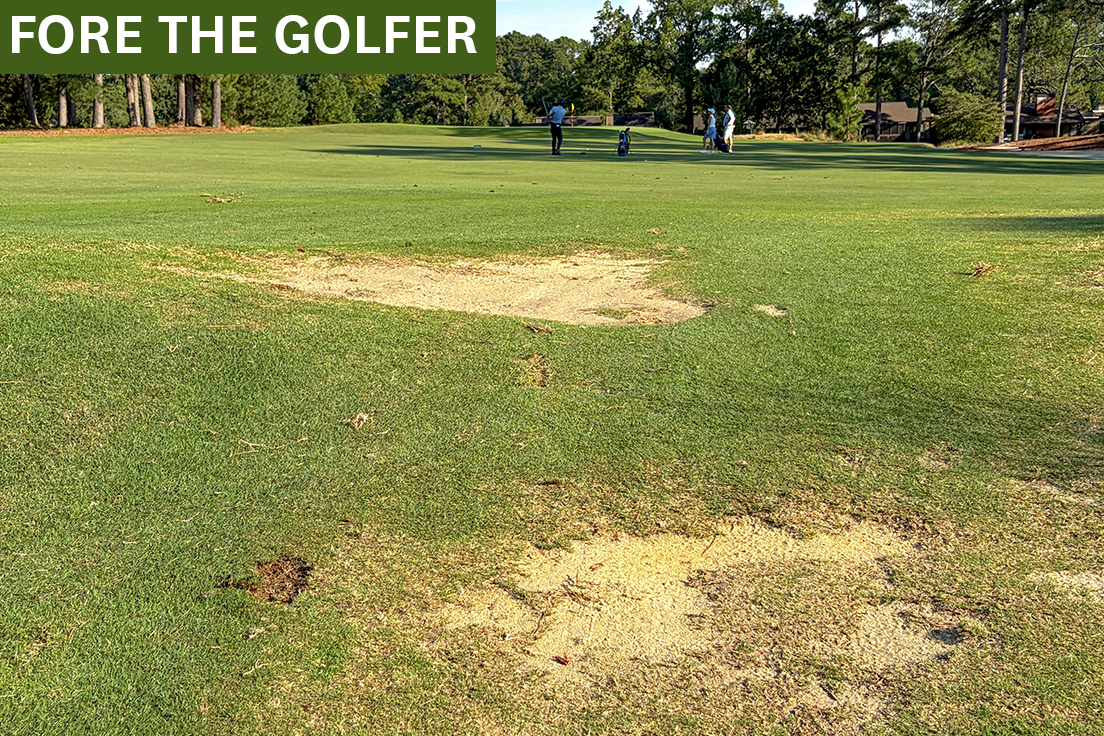
Bare spots in high-traffic areas are a common symptom of heavy play. If possible, avoid walking or driving through worn areas to help them recover.
Over the last several years, golf courses in the U.S. have enjoyed a huge increase in play, especially from new golfers discovering the game. Tee sheets are fuller than we have seen in decades, with courses breaking records year after year for number of rounds played. Busy golf courses are a good sign for the health of the industry and future of the game. However, every success story comes with challenges, and with record rounds comes the reality of managing the impact on golf courses.
A golf course is a living thing. While it may appear durable, it has its limits. Every golf cart, footstep, divot and ball mark places stress on the course. When thousands of rounds are played each month on a golf course, stress accumulates faster than the turf can recover, especially during difficult weather. The result is worn tee boxes, thinning fairways, beat-down green surrounds, and bare spots in walkways and pinch points that simply can’t heal.
To help those areas recover, maintenance teams often need to invest more time and resources. That might mean more water and fertilizer, targeted aeration, or completely regrassing some areas. Finding time to do this work is not easy when courses are booked from sunrise until late afternoon! Nursing damaged areas back to health requires access to the course without having to stop working every few minutes to let a group through.
This is why golfers may encounter temporary tee sheet closures, restricted traffic areas, or maintenance repair work being done during play. Golf facilities recognize that these decisions are an inconvenience for golfers, but taking these steps is the only way to make sure the golf course remains healthy and enjoyable to play throughout the year.
With courses under a heavy amount of stress, golfer cooperation is more important than ever. Following directional signs, respecting ropes and stakes, observing cart restrictions, repairing ball marks and divots, and avoiding areas that are showing signs of wear will lead to better playing conditions. When every golfer does their part, the cumulative benefit over thousands of rounds is significant. It is also important to recognize that seeing some worn areas is inevitable when courses get a lot of play. Even the best-maintained courses you see during televised golf events will show signs of wear from heavy play.
Golf course superintendents take tremendous pride in providing the best possible playing conditions every day. They continually adjust maintenance practices and traffic management strategies to balance course conditioning with the number of golfers who want to play. It’s a balancing act that has become increasingly difficult as golf participation continues to grow. With some shared responsibility and a little understanding, golfers become important partners in preserving the quality of the courses they love to play. Together, we can ensure today’s busy golf courses remain healthy, sustainable and enjoyable for many years to come.
Read the full article at USGA.org.