GreenJacket
With just a brief window to bring greens out of long, harsh winters, a growing list of courses across North America have adopted the same engineered-airflow approach that first solved a career-defining problem in Edmonton, Alberta — and it's still working, nearly twenty years later.
Nearly Twenty Winters Later, the Fix Still Holds
Some readers may remember Chris Prodahl's account of Glendale Golf & Country Club in Edmonton — the putting greens that lost 90 to 95 percent of their turf to anoxia under a sealed winter cover, and the airflow-based fix that superintendent Darryl Asher engineered the following fall to solve it.
It's worth returning to that story, because the most important part of it happened after the article ended: that fix has now protected Glendale's greens every winter since 2007–08. Not a good stretch. Not a lucky run. Going on twenty years.
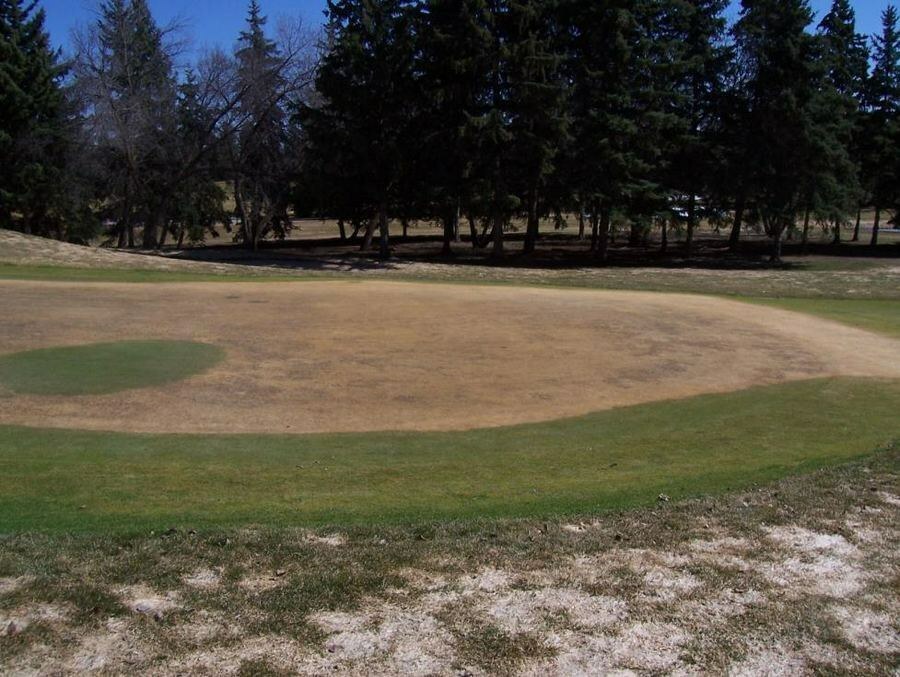
The damage that started it all: Glendale, before the airflow fix.
The system Asher built — and that GreenJacket's Impermeable + AFS covers are engineered around — solved a problem most superintendents have felt but couldn't always name. It isn't the cold that kills turf under a cover. It's what happens to the air underneath it. Seal a green under ice or an impermeable cover for too long, and oxygen disappears while carbon dioxide builds — the plant runs out of the reserves it needs to survive freezing before spring ever arrives. Glendale's own gas-concentration monitoring bore this out directly: ventilation kicked in whenever CO2 climbed above 5% or oxygen dropped below 10%, and those thresholds were enough to hold turf quality all winter, even through a study winter with 150 days of continuous snow cover — the toughest of the three years researchers tracked.
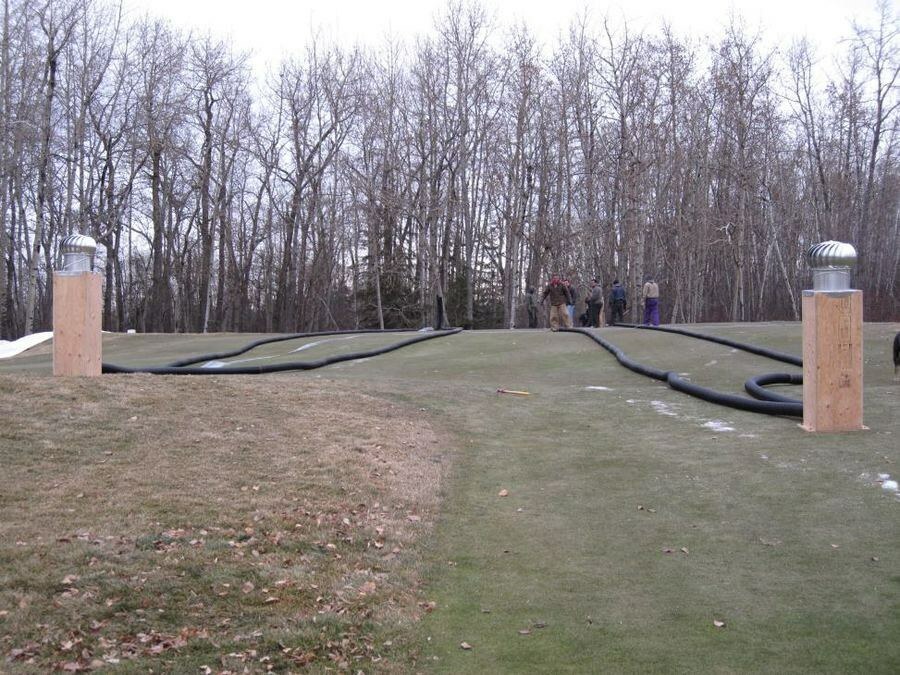
The fix: engineered, continuous airflow — installed once, running all winter.
The operational reality behind that proof is worth knowing too. A 12-person crew needs about three full days to install the system across all of Glendale's greens each fall, and two and a half days to pull it in spring. Four of the club's older, poorly drained greens need ventilating twice a week through the winter; the USGA-built greens with proper internal drainage need it only three or four times a season. That's not a marketing claim — that's a maintenance team's actual logbook, and it's the kind of detail that tells you a system has been lived with, not just installed once and hoped for.
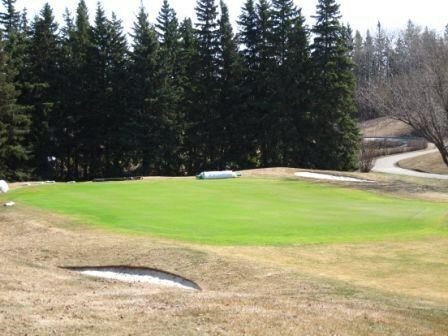
The result, every spring since: full, even turf where the worst damage used to be.
And Glendale Isn't the Only Course With This Story
What started as one club's answer to a bad winter has since been proven, independently, across some of the harshest climates in golf — different courses, different failure modes, same underlying fix.
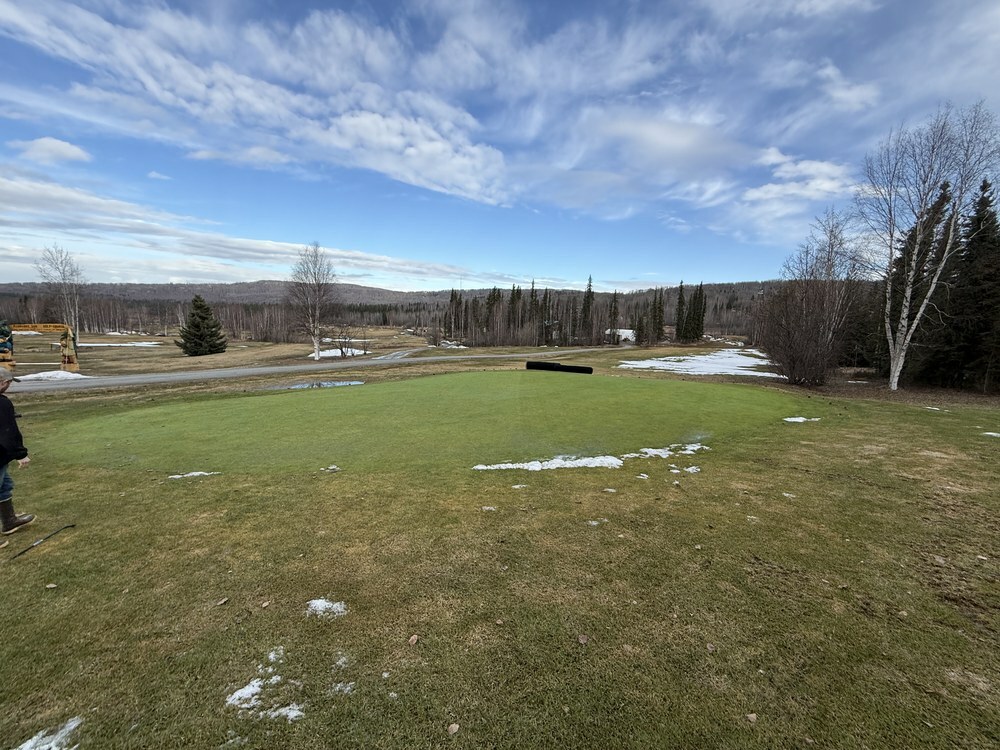
At Midnight Sun Golf Course in Fairbanks, Alaska — America's northernmost USGA-sanctioned course — superintendent Keith Nadon pulled his covers after the second-coldest winter on record, weeks of sustained -40°F.
“None of 'em died.”
— Keith Nadon, Midnight Sun Golf Course, Fairbanks, AK
At Breckenridge Golf Club in Colorado, sitting at 9,500 feet with barely a five-month season, superintendent Alex Kosel has used the same covering approach across all 29 greens to reach tournament-ready conditions by May 1st — six weeks ahead of where the course would otherwise be.
“Guests are blown away at the product we can provide so early in the season. It's really a no-brainer for us after seeing the results year after year.”
— Alex Kosel, Breckenridge Golf Club, CO
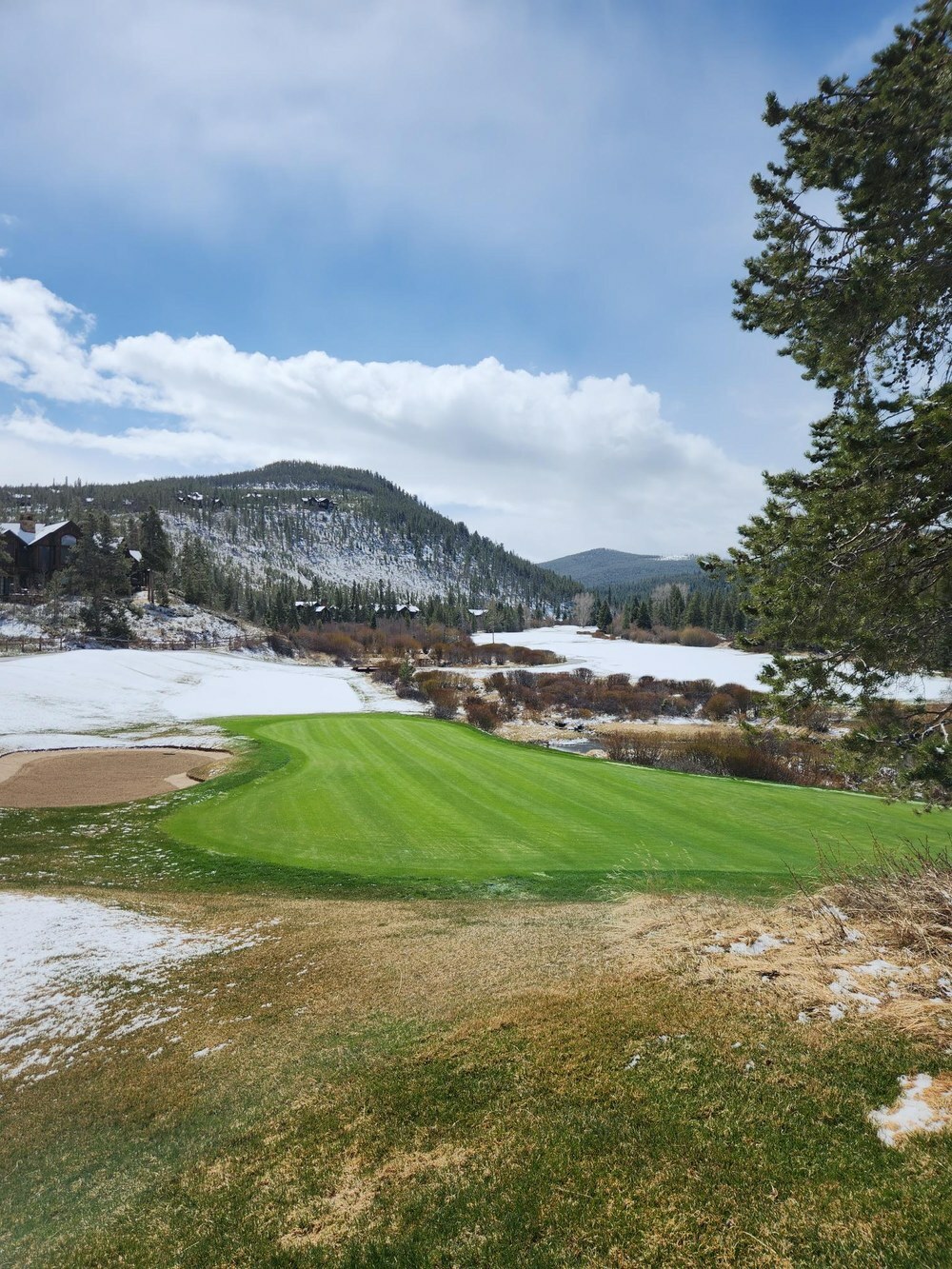
At Sugarloaf Golf Club in Carrabassett Valley, Maine, a course that had once stayed closed until July following a brutal winter turned that story around entirely. The following year, 95% of putting surfaces emerged without damage.
“The consistency across the greens was the most impressive part. We were clearly ahead of where we normally are at this time of year.”
— Ryan Blake, Sugarloaf Golf Club, ME
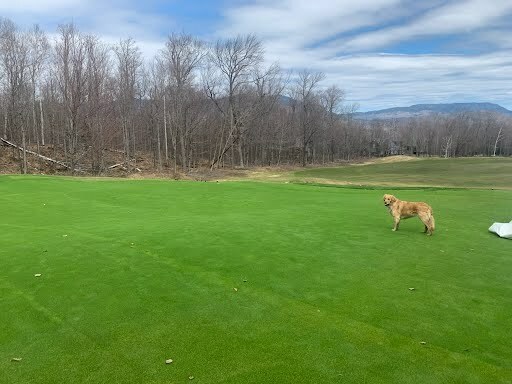
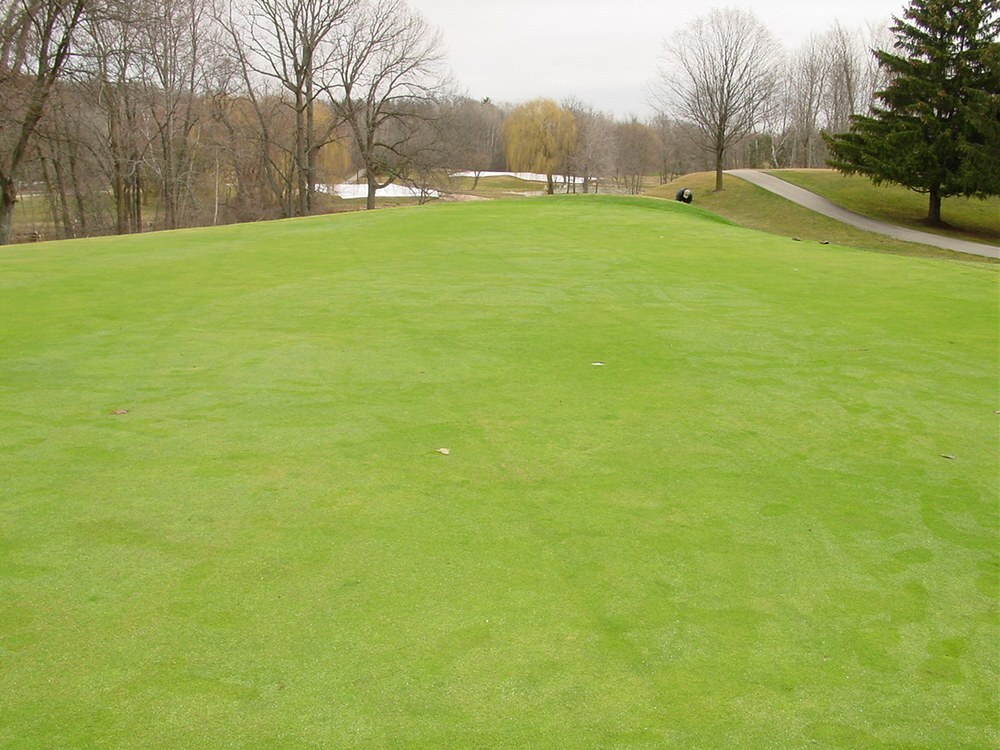
Closer to Michigan's own climate, Oneida Golf & Country Club in Wisconsin — with greens dating back to 1928 — and Ozaukee Country Club, under CGCS Brett Hosler, have both documented the same pattern through Great Lakes winters that MiGCSA members will recognize immediately: freeze-thaw cycles, wind-driven ice, and a short window to get greens tournament-ready before the season's first big event.
“I will never go through a winter without using GreenJackets on my greens. NEVER!”
— Mark Storby, Director of Agronomy, Oneida Golf & Country Club, WI
“Using permeable covers in our area, for our situation, is a no-brainer for me.”
— Brett Hosler, CGCS, Ozaukee Country Club, WI
One System. Four Majors.
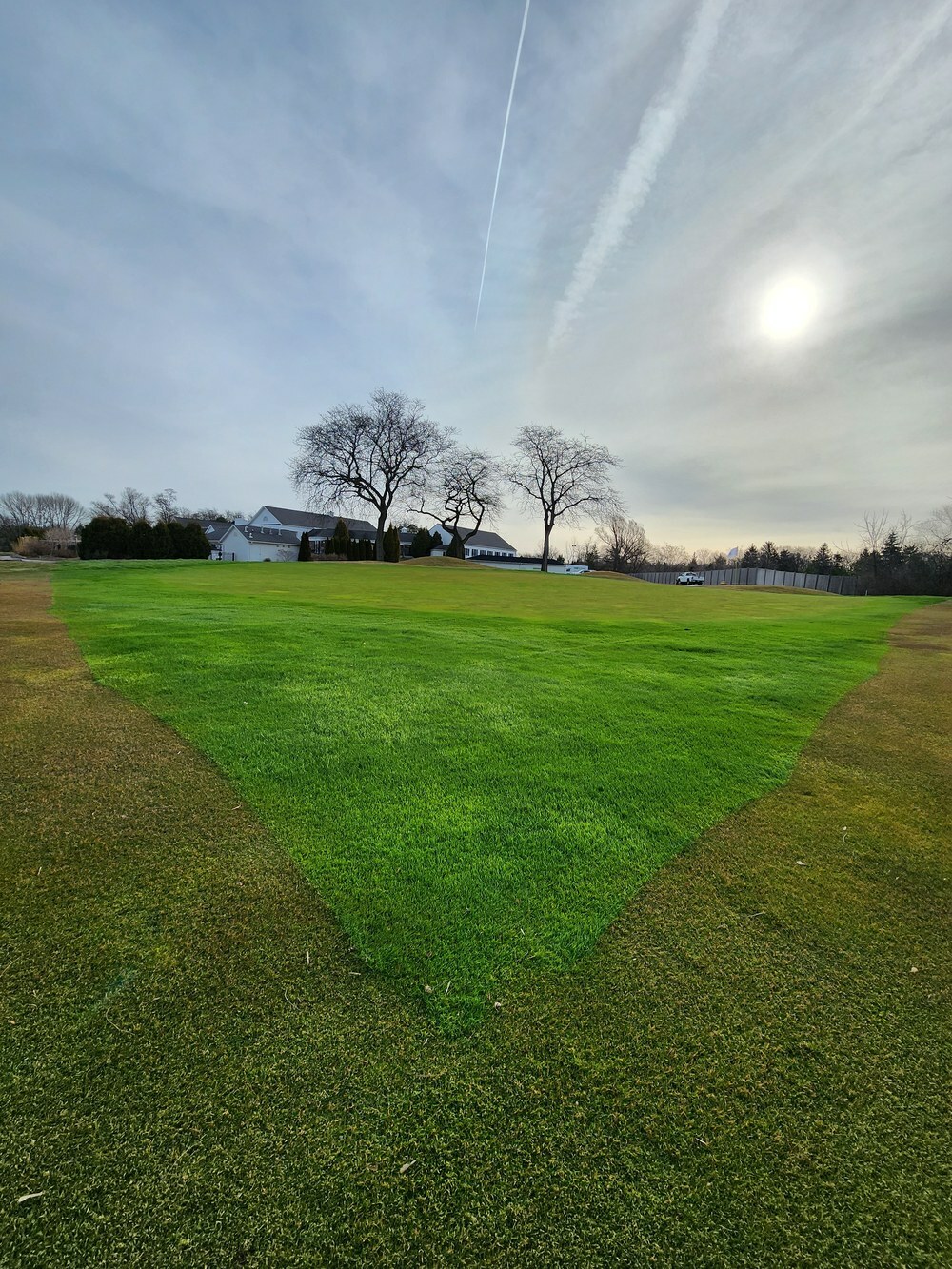
Every one of these stories — Glendale's twenty years, Midnight Sun's -40°F save, Breckenridge's elevation, Sugarloaf's turnaround, the Great Lakes courses managing the same freeze-thaw reality MiGCSA members face every winter — runs on the same underlying engineering: insulation built to hold through sustained cold, and airflow engineered so the environment underneath a cover never turns against the plant. That system now comes in four forms — Impermeable + AFS, Permeable Clear, Permeable Black, and Field & Sports — built from the same research, adapted to whatever winter a given course actually faces.
Nine courses. Nine climates. One question every superintendent asks every spring, answered the same way each time.
Read the full field report series — Glendale included — at GreenJacket.com/field-reports.
Learn more at GreenJacket.com · Call 888-786-2683