The growth in golf travel isn’t just a surge in demand — it’s reshaping how golfers engage with the game in an area where the industry is creating value.
Each of the past four years has seen record or near record levels of Americans hitting the road to play golf: over 12 million annually from 2022 to 2025. That’s up 49% compared to recent pre-Covid levels and about 10% above the comparable stretch in the mid-2000’s prior to the Great Recession.
And over the past 12 months entering spring of 2026, the momentum has hit new heights.
Golf travel overall is the second-largest segment of the U.S. golf economy trailing only the industry’s dominant revenue bucket — facility operations. Golf generates more than $30 billion annually in tourism-related expenditures away from the course, from travel and lodging to meals and incidentals. Approximately another $10 billion can be tacked on when it comes to play-related fees as well as merchandise and food & beverage spend by traveling golfers.
Golf trips, whether with friends, family, significant others, colleagues or clients, are a vital part of the industry because they concentrate spend, time and engagement in ways everyday play doesn’t.
The elevated demand for golf-motivated trips is also having an impact on supply.
Over the past five years, almost one-third of new golf course openings have had a resort tie. In comparison, just over 10% of the nation’s approximately 16,000 existing golf courses are affiliated with a resort or resort-real estate property.
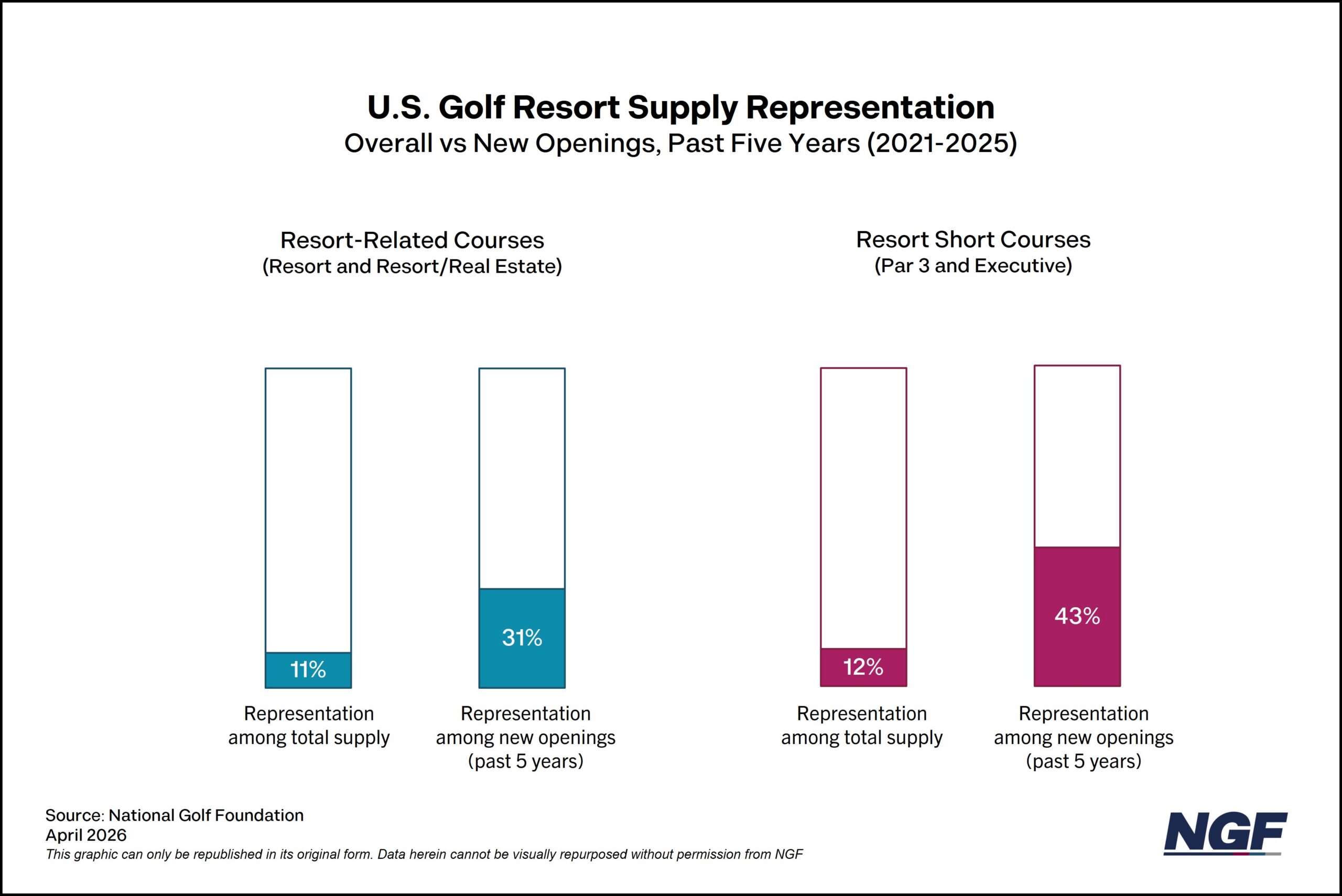
Arcadia Bluffs (Michigan), Big Cedar (Missouri), Gamble Sands (Washington) and McLemore (Georgia) all opened new resort courses of various types in 2025, while getaways like Rodeo Dunes (Colorado), Sand Valley (Wisconsin) and Wild Spring Dunes (Texas) and all had soft openings — with limited preview play at new courses officially debuting this year. And beyond the resorts that have debuted or added new courses in recent years, there are the modern private destination clubs that draw itinerant golfers, among them South Carolina spots like Broomsedge, Old Barnwell and The Tree Farm.
Appetite for golf travel is at its highest level ever. Of course, some of this is ambitiously aspirational, but nearly half of golfers (47%) say they expect to play golf while traveling (even if it’s not a dedicated golf trip) in the coming year.
All of this speaks to more than new courses or rising spend.
These journeys – whether a dedicated buddies’ trip, couples’ getaways or quick loop squeezed into a broader vacation — are where golf becomes more social, more experiential, and more memorable. In that sense, golf travel is much more than just one segment of the industry, becoming a catalyst for deeper engagement that strengthens connection between players and with the game itself.